The Evolution of Visual Gaming: How the VR Icon and Goggle Symbol Represent a New Era
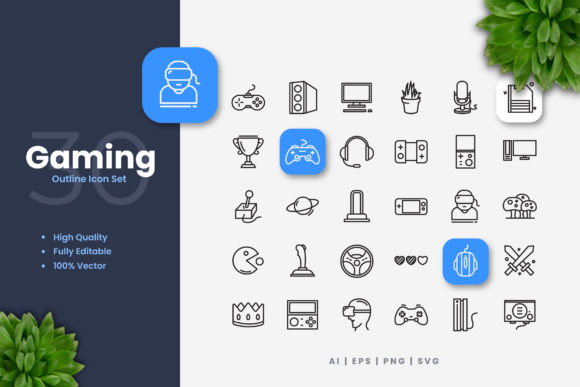
In the dynamic world of digital design and gaming, symbols communicate complex ideas instantly. Two of the most powerful visual shorthand elements today are the VR (Virtual Reality) icon and the stylized goggle graphic. These are not just simple drawings; they are the universally recognized ambassadors for a transformative technology. When combined in a well-organized vector illustration, they become a versatile asset for graphic commercial purposes, printed files, and presentations. This article explores the journey of these icons, their significance in gaming and beyond, and why high-quality vector files (AI, EPS, SVG, PNG, JPG) are crucial for professionals looking to leverage this visual language.
From Arcade Cabinets to Immersive Worlds: The Rise of VR Gaming
Gaming has always been about pushing visual boundaries. From the pixelated sprites of the 80s to the hyper-realistic 3D environments of today, the quest for immersion has been constant. Virtual Reality represents the latest, and perhaps most profound, leap in this journey. VR gaming places you inside the game world, replacing a screen on a desk with a universe you can look around and interact with. This shift from observational to experiential gaming is fundamental. The technology hinges on two main components: a headset (the goggles) and sophisticated software that creates the virtual space. This is where our two key symbols come into play.
Decoding the Symbols: The Goggle and the VR Icon
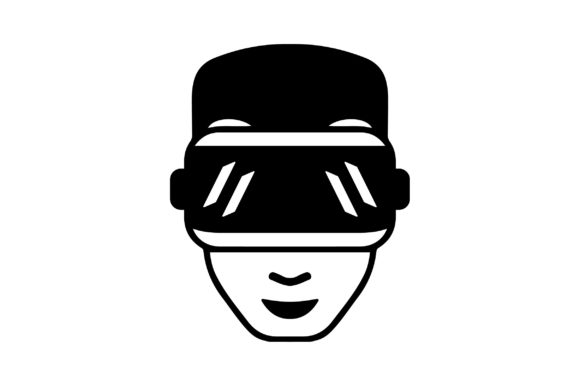
The goggle illustration is a stylized representation of a VR headset. It typically strips away the complex electronics and brand-specific details to present a clean, recognizable shape—often a rounded visor with a slight separation to suggest two lenses. This graphic immediately signals "head-mounted device" and "immersive viewing."
The VR icon is frequently an abstraction that combines the goggle form with other cues. It might incorporate a circular motion element, suggesting a 360-degree environment, or simple human silhouettes to denote interaction. Sometimes, it's just the letters "VR" crafted in a modern, tech-forward font. Together, these symbols form a visual vocabulary that says: "This is about virtual reality." Their purpose is to communicate quickly and effectively across languages and cultures, essential in global marketing and user interface design.
The Significance of a Well-Organized Vector Illustration
When these elements are crafted into a well-organized vector illustration, their utility expands exponentially. Vector graphics are built from mathematical paths, not pixels. This means they are infinitely scalable without any loss of quality—a logo can be shrunk for a business card or blown up for a billboard with perfect clarity. For commercial purposes, this is non-negotiable.
Let’s break down the included file formats and their practical relevance:
- AI & EPS: These are native, editable vector files for professional software like Adobe Illustrator. They allow designers to deconstruct the illustration, change colors, separate elements, and integrate the goggle or VR icon into larger compositions.
- SVG: Scalable Vector Graphics are the standard for web use. They ensure crisp icons on websites and apps at any screen resolution and are critical for modern, responsive design.
- PNG & JPG: These rasterized formats provide ready-to-use images for situations where editing isn't required, such as quick insertion into PowerPoint presentations, printed brochures, or social media posts. PNG offers transparency support, which is invaluable for overlaying graphics.
Practical Relevance Across Modern Life and Business
These illustrations find application far beyond just gaming company logos.
- Business & Marketing: A tech startup pitching a VR product uses these icons in its pitch deck (Presentation). A conference on future technologies uses them on its printed flyers and banners (Printed Files). They establish immediate thematic credibility.
- Education & Training: Instructional materials for VR safety, university courses on immersive design, or corporate training modules for soft skills in virtual environments all use these icons to visually anchor the topic.
- Creative Industries: Game developers, graphic artists, and UI/UX designers use these vector assets as foundational elements in their own creative workflows, saving time and ensuring visual consistency.
Clarifying Common Misunderstandings
A common assumption is that these icons are only for "hardcore" gaming. This is a misunderstanding. While gaming is the most popular driver of VR adoption, the technology and its symbols have permeated numerous fields:
Medical surgeons use VR for training simulations; architects walk clients through virtual buildings; historians recreate ancient sites for education. The goggle icon, therefore, represents a gateway to simulated experiences of all kinds, not just entertainment.
Another misconception is that any stock image of a headset will suffice for professional work. The quality and format matter deeply. A low-resolution, non-editable image can degrade a brand's perceived quality, limit usability across media, and cause technical headaches in production. A well-organized vector pack provides the flexibility and quality that professional projects demand.
Building a Broader Understanding: The Icon as a Cultural Marker
The persistent evolution of the VR and goggle iconography mirrors the technology's journey. Early icons were often clunky, literal representations of heavy headsets. Today, they are sleek, minimalist, and futuristic—reflecting the design evolution of the hardware itself towards lighter, more stylish devices. They have become cultural markers, signifying innovation, the future, and a shift in how humans interact with digital information.
In daily life, seeing these icons on a website for a new product, in a school's curriculum announcement, or on a trade show booth immediately frames the content. They prepare the viewer for a discussion about immersive tech. They are, in essence, the visual keys to unlocking a specific and exciting domain of modern technology.
Conclusion: More Than Just Graphics
The VR icon and goggle graphic are the visual foundation of a revolution. In gaming, they symbolize the ultimate pursuit of immersion. In business, education, and creativity, they represent the practical tools of simulation and experiential learning. A high-quality, well-organized vector illustration containing these elements is therefore not just a graphic asset; it is a professional toolkit. The included file formats (AI, EPS, SVG, PNG, JPG) ensure this toolkit is ready for any commercial, printed, or presentation need, allowing the powerful story of Virtual Reality to be told clearly and compellingly, wherever it needs to be seen.